 |
Moteur de recherche de fiches techniques de composants électroniques |
|
|
Moteur de recherche de fiches techniques de composants électroniques |
|
The question interval is too short.
Please try again in a few seconds.

Hello, Please ask a question about EUP9232 Datasheet
# Example questions:
➢ How does the minimum overdischarge detection voltage (vdd1,2) change from 25°c to the -20°c to +70°c temperature range?
➢ What is the purpose of the 0v battery charging function, and what voltage range defines the start of this function (v0cha)?
➢ What is the typical value for the overcharge detection voltage (vcu1,2) at 25°c?
| Part No. | EUP9232 |
| Manufacturer | EUTECH |
| Size | 545 Kbytes |
| Pages | 20 pages |
| Description | LI-ION/POLYMER TWO CELL PROTECTOR |










1. Chip Overview:
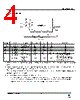
️· Product: DS9232
️· Type: Battery Charger IC (with various protection and monitoring features)
️· Version: Ver 1.1 (Feb 2007)
️· Primary Function: Manages charging of batteries, including a 0V battery charging function. Also provides overcharge, over-discharge, over-current, and temperature protection.
️· Operating Temperature Range (Standard): 25°C unless otherwise specified
️· Extended Operating Temperature Range: -20°C to +70°C (with modified electrical characteristics – see separate section)
2. 0V Battery Charging Function:
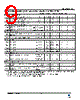
️· V0CHA (Starting Voltage): 0.38V - 1.12V. The charger starts when the battery voltage reaches this range.
️· V0INH1,2 (Inhibition Voltage): 0.32V - 1.44V. The charger stops when the battery voltage reaches this range. This is the voltage at which the charging function becomes "unavailable".
3. Electrical Characteristics (25°C - Standard Conditions):
️· Detection Voltages (VCU1,2, VCD1,2, VDD1,2, VDU1,2): These voltages define the thresholds for overcharge, over-discharge, and related protection. Specific values are detailed in the table; variations depend on whether the chip is within the Standard or Extended temperature range.
️· Overcurrent Detection:
- VIOV1: 0.03V - 0.07V
- VIOV2: 0.45V - 1.35V
️· Temperature Coefficients (TCOE1, TCOE2): These describe how the detection voltages change with temperature. TCOE1 relates to overcharge/discharge, while TCOE2 relates to overcurrent.
️· Delay Times (tCU1,2, tDD1,2, tIOV1, tIOV2):
- tCU1,2 (Overcharge Delay): 0.6-1.84 seconds
- tDD1,2 (Overdischarge Delay): 67-140 ms
- tIOV1 (Overcurrent Delay): 6.5-14.5 ms
- tIOV2 (Overcurrent Delay): 220 us
️· Input/Operation Voltages (VDSOP1, VDSOP2): Defines the operating voltage ranges.
️· Output Voltages (VDO(H), VDO(L), VCO(H), VCO(L)): Describes the voltage levels for the DO (Data Out) and CO (Control Out) pins under load conditions.
️· Internal Resistance (RVCm, RVSM): Specifies the resistance between VCC/VSS and VM.
4. Electrical Characteristics (-20°C to +70°C - Extended Conditions):
️· The Extended temperature range modifies the values of several parameters, *particularly* the detection voltages (VCU1,2, VCD1,2, VDD1,2, VDU1,2) and the delay times (tCU1,2, tDD1,2, tIOV1, tIOV2). The ranges widen, indicating greater tolerance for operation outside the standard conditions. Carefully review these extended range values if the chip will operate in this temperature range, as they affect the protection and charging behavior.
️· Examples:
- tCU1,2 (Overcharge Delay): Wider range, 0.6 - 1.84 seconds.
- tDD1,2 (Overdischarge Delay): Wider range, 67 - 140ms
Key Developer/Engineer Considerations:
️· Temperature Range: Determine the expected operating temperature range for the application. If it's outside the 25°C standard, use the extended characteristics.
️· 0V Battery Charging: Understand the V0CHA and V0INH1,2 voltages to control charging behavior.
️· Protection Thresholds: Pay close attention to the VCU, VCD, VDD, and VDU voltages to ensure adequate battery protection.
️· Delay Times: The delay times (tCU, tDD, tIO) are critical for system responsiveness. Consider these values when designing safety mechanisms.
️· Datasheet Revision: This document is dated Feb 2007. Check if a more recent revision exists, as it might contain updated information or corrections.
1. Chip Overview:
️· Product: DS9232
️· Type: Battery Charger IC (with various protection and monitoring features)
️· Version: Ver 1.1 (Feb 2007)
️· Primary Function: Manages charging of batteries, including a 0V battery charging function. Also provides overcharge, over-discharge, over-current, and temperature protection.
️· Operating Temperature Range (Standard): 25°C unless otherwise specified
️· Extended Operating Temperature Range: -20°C to +70°C (with modified electrical characteristics – see separate section)
2. 0V Battery Charging Function:
️· V0CHA (Starting Voltage): 0.38V - 1.12V. The charger starts when the battery voltage reaches this range.
️· V0INH1,2 (Inhibition Voltage): 0.32V - 1.44V. The charger stops when the battery voltage reaches this range. This is the voltage at which the charging function becomes "unavailable".
3. Electrical Characteristics (25°C - Standard Conditions):
️· Detection Voltages (VCU1,2, VCD1,2, VDD1,2, VDU1,2): These voltages define the thresholds for overcharge, over-discharge, and related protection. Specific values are detailed in the table; variations depend on whether the chip is within the Standard or Extended temperature range.
️· Overcurrent Detection:
- VIOV1: 0.03V - 0.07V
- VIOV2: 0.45V - 1.35V
️· Temperature Coefficients (TCOE1, TCOE2): These describe how the detection voltages change with temperature. TCOE1 relates to overcharge/discharge, while TCOE2 relates to overcurrent.
️· Delay Times (tCU1,2, tDD1,2, tIOV1, tIOV2):
- tCU1,2 (Overcharge Delay): 0.6-1.84 seconds
- tDD1,2 (Overdischarge Delay): 67-140 ms
- tIOV1 (Overcurrent Delay): 6.5-14.5 ms
- tIOV2 (Overcurrent Delay): 220 us
️· Input/Operation Voltages (VDSOP1, VDSOP2): Defines the operating voltage ranges.
️· Output Voltages (VDO(H), VDO(L), VCO(H), VCO(L)): Describes the voltage levels for the DO (Data Out) and CO (Control Out) pins under load conditions.
️· Internal Resistance (RVCm, RVSM): Specifies the resistance between VCC/VSS and VM.
4. Electrical Characteristics (-20°C to +70°C - Extended Conditions):
️· The Extended temperature range modifies the values of several parameters, *particularly* the detection voltages (VCU1,2, VCD1,2, VDD1,2, VDU1,2) and the delay times (tCU1,2, tDD1,2, tIOV1, tIOV2). The ranges widen, indicating greater tolerance for operation outside the standard conditions. Carefully review these extended range values if the chip will operate in this temperature range, as they affect the protection and charging behavior.
️· Examples:
- tCU1,2 (Overcharge Delay): Wider range, 0.6 - 1.84 seconds.
- tDD1,2 (Overdischarge Delay): Wider range, 67 - 140ms
Key Developer/Engineer Considerations:
️· Temperature Range: Determine the expected operating temperature range for the application. If it's outside the 25°C standard, use the extended characteristics.
️· 0V Battery Charging: Understand the V0CHA and V0INH1,2 voltages to control charging behavior.
️· Protection Thresholds: Pay close attention to the VCU, VCD, VDD, and VDU voltages to ensure adequate battery protection.
️· Delay Times: The delay times (tCU, tDD, tIO) are critical for system responsiveness. Consider these values when designing safety mechanisms.
️· Datasheet Revision: This document is dated Feb 2007. Check if a more recent revision exists, as it might contain updated information or corrections.
| Part No. | EUP9232 |
| Manufacturer | EUTECH |
| Size | 545 Kbytes |
| Pages | 20 pages |
| Description | LI-ION/POLYMER TWO CELL PROTECTOR |
| ALLDATASHEET vous a-t-il été utile ? [ DONATE ] |
À propos de Alldatasheet | Publicité | Contactez-nous | Politique de confidentialité | Lien vers la fiche technique | Echange de liens | Fabricants All Rights Reserved©Alldatasheet.com |
| Russian : Alldatasheetru.com | Korean : Alldatasheet.co.kr | Spanish : Alldatasheet.es | French : Alldatasheet.fr | Italian : Alldatasheetit.com Portuguese : Alldatasheetpt.com | Polish : Alldatasheet.pl | Vietnamese : Alldatasheet.vn Indian : Alldatasheet.in | Mexican : Alldatasheet.com.mx | British : Alldatasheet.co.uk | New Zealand : Alldatasheet.co.nz |
|
Family Site : ic2ic.com |
icmetro.com |
 French ▼
  English
 Chinese
 German
 Japanese
 Russian
 Korean
 Spanish
 Italian
 Portuguese
 Polish
 Vietnamese
 Indian
 Mexican
 British
 New Zealand